
Product Description
Product Description
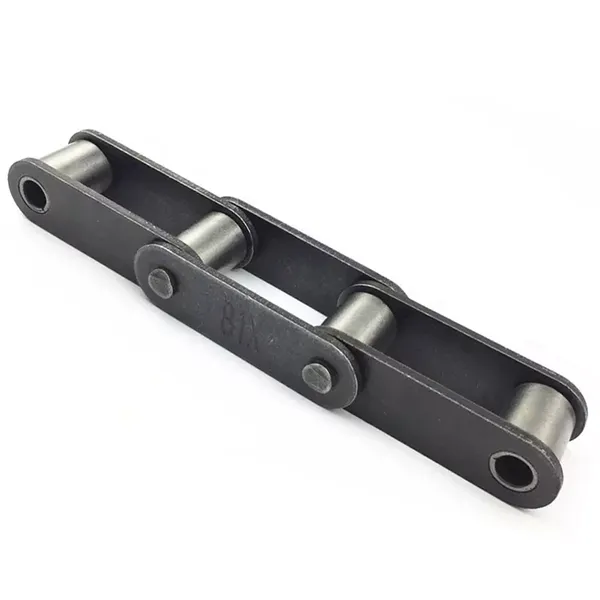
| Item | Overhead Conveyor Chain | Application | Machinery Parts |
| Surface Teatment | Black paint | Brand | OEM |
| Package | Poly-wooden case | Port | Any sea port or airport in China |
| Other Products | |||
| Standard A/B Roller Chain | 08B,10B,12B,16B,40,50,60,80 | Motorcycle Chain | 415,415H,420,428,428H,520,520H,525,530 |
| Bicycle Chain | 410,Z50,Z51,Z80,Z10,RX-11 | Silent Chain | SC3,SC4,SC5,SC6,SC8,SC10 |
| Oil Field Chain | 100G,120G,140G,160G,180G | Side Bow Chain | 40SB,43SB,50SB,60SB,63SB,80SB,08BSB |
| Heavy Duty Cranked Link Chain | 2571,2512,2814,3315,3618, 4571,2184,4824 |
Chain Coupling | 3012,4012,4014,5014,5016,5018,6018,6571, 6571,8018,8571,8571,1571,12018,12571 |
| Double Pitch Conveyor Chain | C2040,C2042,C2050,C2052,C2060, C2062,C2060,C2080,C2082,C2100 |
Welded Chain | |
| Chain with Extended Pins | 08A/10A/12A/16A-D1/D2 | Hollow Pin Chain | 08BHP,10BHP,12BHP,40HP,50HP,60HP,80HP |
| Rubber Top Roller Chain | 08B-G1/G2,10B-G1/G2,12B-G1/G2,16B-G1/G2,20B-G1,24B-G1 | Double Plus Chain | BS25-C206B,BS25-C208A,BS25-C210A,BS30-C212A,BS30-C216A |
| Plastic Chain | PC35,PC40,PC50,PC60 | Palm Oil Chain | 5571,5094,5234,3076,4075,5289,5257,5305 |
| Sugar Mill Chain | 2184,8184, 0571 3, 0571 5,5956 | Paver Chain | P80,P78.1 |
| Paper Mill Chain | 63PF2 | Bottle Washer Chain | P139.7-A2,P140,P150X,P155X,P160X, P165X,P169X |
| Steel Mill Chain | P100,P160,P500 | Leaf Chain | BL523,BL534,BL588,BL634,BL866,BL1244 |
| Agricultural Chain | S45,S55,S55V,A550,CA550,CA624 | Forged Chain | 10160,14218,14226,160,125,200,216,260 |
| Forged Trolley | X348,X458,X678,X698,160 | Cast Chain | CC600,C55,C188,C102B,C132,477,455,488 |
| Overhead Conveyor Forged Chain | 5075-S/HH/HA, 7 Tons, 5 Tons | Detachable Chain | 25,32,42,51,52,55,62,70,72 |
| Snow Chain | D6,8,10,12,14,18,22,24,26,28,30 | Sprockets | Standard, Non-standard |
/* January 22, 2571 19:08:37 */!function(){function s(e,r){var a,o={};try{e&&e.split(“,”).forEach(function(e,t){e&&(a=e.match(/(.*?):(.*)$/))&&1
| Material: | Iron |
|---|---|
| Structure: | Combined Chain |
| Surface Treatment: | Polishing |
| Chain Size: | P150 |
| Feature: | Fire Resistant, Oil Resistant, Heat Resistant |
| Transport Package: | Poly-Wooden Case |
| Customization: |
Available
| Customized Request |
|---|
How does a conveyor chain handle inclined or declined conveyance?
A conveyor chain is designed to handle various types of conveyance, including inclined or declined applications. Here’s how a conveyor chain handles these situations:
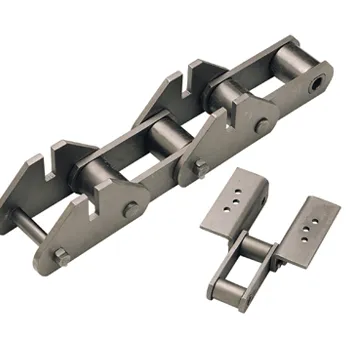
1. Inclined Conveyance: When a conveyor system is required to move materials uphill, an inclined conveyor chain is used. The chain’s design includes special attachments or cleats that provide additional grip and prevent material from slipping or sliding backward. These attachments are strategically positioned along the chain to ensure effective conveyance on inclines.
2. Declined Conveyance: For conveyors that move materials downhill, a declined conveyor chain is utilized. Similar to inclined conveyance, the chain may have specialized attachments or cleats that help control the speed and prevent material from sliding too quickly. These attachments keep the material in place and ensure a controlled and efficient flow downward.
Both inclined and declined conveyance require careful consideration of the chain’s design, including the type and arrangement of attachments. The size, shape, and weight of the conveyed material also play a role in determining the appropriate chain configuration. It’s important to consult with conveyor chain manufacturers or experts to select the right chain and attachments for specific inclined or declined applications.
How does a conveyor chain impact material flow in a production line?
A conveyor chain plays a crucial role in facilitating the smooth and efficient flow of materials in a production line. Here are the key ways in which a conveyor chain impacts material flow:
1. Continuous Movement: A conveyor chain enables continuous movement of materials along the production line. By securely holding and transporting the materials, the chain ensures a consistent flow without interruptions or delays.
2. Speed Control: The speed at which the conveyor chain moves can be adjusted to match the desired production rate. This allows for precise control over the material flow, ensuring that it aligns with the downstream processes and avoids bottlenecks or overloading.
3. Orientation and Positioning: Conveyor chains can be designed with specific attachments or fixtures to orient and position materials in a desired manner. This ensures that the materials are presented correctly for processing, assembly, or packaging, optimizing the overall production flow.
4. Sorting and Diverging: In certain applications, conveyor chains can be equipped with mechanisms for sorting or diverging materials based on predetermined criteria. This allows for efficient routing of different products or components to their respective destinations, streamlining the material flow.
5. Accumulation and Buffering: Conveyor chains can incorporate accumulation zones or buffering areas where materials can temporarily pause or accumulate. This feature is useful when downstream processes experience temporary disruptions or when there is a need to balance the flow between different production stages.
6. Integration with Equipment: Conveyor chains can be integrated with other equipment or machines in the production line, such as robotic arms, automated packaging systems, or inspection stations. This seamless integration enables synchronized material handling, optimizing the flow and efficiency of the entire production process.
7. Customization for Specific Needs: Conveyor chains can be customized to meet specific material handling requirements. This includes considerations such as chain width, length, height adjustments, inclines or declines, and specialized attachments or guides. Such customization ensures that the material flow is tailored to the unique needs of the production line.
By providing a reliable and controlled method of transporting materials, a conveyor chain significantly influences the material flow in a production line. It enhances productivity, reduces manual handling, minimizes the risk of errors or damage, and ultimately contributes to the overall efficiency and success of the manufacturing process.
What is a conveyor chain and how does it work?
A conveyor chain is a type of mechanical chain specifically designed for use in conveyor systems. It is composed of a series of interconnected links that form a continuous chain loop. The links are typically made of metal and are joined together through pins or other connecting elements.
Conveyor chains work by transferring power and motion from the driving mechanism, such as a motor or sprocket, to the conveyor system to move materials or products along a predetermined path. The chain is placed on a track or guide rails, and as it moves, it carries the load placed on it.
The operation of a conveyor chain involves the following steps:
- Power transmission:
The driving mechanism transfers rotational power to the conveyor chain, typically through a motor and sprockets. The motor provides the necessary torque to drive the chain.
- Traction and motion:
As the driving mechanism rotates the sprockets, the teeth of the sprockets engage with the links of the conveyor chain. This interaction creates traction, causing the chain to move along the desired path.
- Load carrying:
The load to be transported is placed on the conveyor chain. The load can be in the form of products, materials, or other items. As the chain moves, it carries the load along the conveyor system, allowing for efficient transportation or handling.
- Support and guidance:
The conveyor chain is supported and guided by various components, such as guide rails, rollers, or wear strips. These components ensure the proper alignment and smooth movement of the chain along the conveyor system.
Conveyor chains are commonly used in industries such as manufacturing, logistics, packaging, and material handling. They offer a reliable and efficient method for moving products or materials in a controlled and automated manner.


editor by CX 2024-04-02