
Product Description
Diameter 81MM Marine Stud Link Anchor Chain
1. Stud Link Anchor Chain Cable Introduction:
Stud Link Anchor Chain is widely used on Floating Equipment, Ships, Oil Rigs and Mooring Buoys.
We supply wide range of sizes and grades:
Grade U2 / U3 from 12.5mm to 162mm; Grade ORQ / R3 /R3S / R4 from 58mm to 162mm
Can be supplied with CCS BV LR NK KR ABS DNV-GL RMRS IRS certificate etc.
Our chain can meet requirement of ISO1704, GB/T 549, JIS F3303, Gost 228, IACS, OCIMF, API and other international regulations.
2. Our Advantage:
Manufacturing Advantage:
1.We have more than 20 years experience in anchor chain production.
2.We keep some in stock can delivery in 1~5 days to meet urgent requirement.
3.Our factory is ISO9001 approval, OSHMS18001 approval, ISO14001 approval, API approval and type approval by all IACS members.
4.Advantage manufacturing facilities:
Advanced program-controlled chain production line; Automatic heat treatment machine; Automatic shot blasting machine.
5.Quality Control:Manufacturing process quality control from raw material to final product.
Whole set drawing approved by all IACS members; Material Fatigue Test on request; Stress Analysis on request; Stress actual test on quest.
Magnetic power testing, ultrasonic testing, and fluorescent penetrant inspection.
Load test machine up to 4000Ton.
3. About Our factory:
Our main products:
Anchor chain and accessories (Stud Link Anchor Chain, Studless Anchor Chain, all types of shackles and connectors)
Mooring chain and accessories (Stud Link Mooring Chain, Studless Mooring Chain, Grade ORQ, R3, R3S, R4 and R5)
Deck outfitting (Chain Stopper, Chock, Bollard and Fairlead)
Marine anchors (Oridinary Anchor such as Hall, Spek and Stockless Anchor, High Holding Power Anchor such as AC-14, Danforth and Pool Achor)
Offshore and agricultural anchors (Flipper Delta, Stevpris MK5, MK6 and Stevshark)
Offshore mooring buoy (Steel Structured, Foam Filled and Navigation Buoys)
Products with high quality and service of professionality is what we pursue.
Please contact us if you have any queries, we will do our best to meet your requirements.
3. Product Dimensions:
4. Technical Data
Proof Load and Breaking Load of Stud Link Anchor Chain:
| Dia. | Proof load(KN) | Breaking load(KN) | Weight | ||||
| MM | U1 | U2 | U3 | U1 | U2 | U3 | KG/M |
| 11 | 36 | 52 | 72 | 52 | 72 | 102 | 2.65 |
| 12.5 | 46 | 66 | 92 | 66 | 92 | 132 | 3.42 |
| 14 | 58 | 82 | 116 | 82 | 116 | 165 | 4.29 |
| 16 | 76 | 107 | 150 | 107 | 150 | 216 | 5.61 |
| 17.5 | 89 | 127 | 179 | 127 | 179 | 256 | 6.71 |
| 19 | 105 | 150 | 211 | 150 | 211 | 301 | 7.91 |
| 20.5 | 123 | 175 | 244 | 175 | 244 | 349 | 9.20 |
| 22 | 140 | 200 | 280 | 200 | 280 | 401 | 10.60 |
| 24 | 167 | 237 | 332 | 237 | 332 | 478 | 12.61 |
| 26 | 194 | 278 | 389 | 270 | 389 | 556 | 14.80 |
| 28 | 225 | 321 | 449 | 321 | 449 | 642 | 17.17 |
| 30 | 257 | 368 | 514 | 368 | 514 | 735 | 19.71 |
| 32 | 291 | 417 | 583 | 417 | 583 | 833 | 22.43 |
| 34 | 328 | 468 | 655 | 468 | 655 | 937 | 25.32 |
| 36 | 366 | 523 | 732 | 523 | 732 | 1050 | 28.38 |
| 38 | 405 | 581 | 812 | 581 | 812 | 1190 | 31.62 |
| 40 | 448 | 640 | 896 | 640 | 896 | 1280 | 35.04 |
| 42 | 492 | 703 | 981 | 703 | 981 | 1400 | 38.63 |
| 44 | 538 | 769 | 1080 | 769 | 1080 | 1540 | 42.40 |
| 46 | 585 | 837 | 1170 | 837 | 1170 | 1680 | 46.34 |
| 48 | 635 | 908 | 1270 | 908 | 1270 | 1810 | 50.46 |
| 50 | 685 | 981 | 1370 | 981 | 1370 | 1960 | 54.75 |
| 52 | 739 | 1060 | 1480 | 1060 | 1480 | 2110 | 59.22 |
| 54 | 794 | 1140 | 1590 | 1140 | 1590 | 2270 | 63.86 |
| 56 | 851 | 1220 | 1710 | 1220 | 1710 | 2430 | 68.68 |
| 58 | 909 | 1290 | 1810 | 1290 | 1810 | 2600 | 73.67 |
| 60 | 969 | 1380 | 1940 | 1380 | 1940 | 2770 | 78.84 |
| 62 | 1030 | 1470 | 2060 | 1470 | 2060 | 2940 | 84.18 |
| 64 | 1100 | 1560 | 2190 | 1560 | 2190 | 3130 | 89.70 |
| 66 | 1160 | 1660 | 2310 | 1660 | 2312 | 3300 | 95.40 |
| 68 | 1230 | 1750 | 2450 | 1750 | 2450 | 3500 | 101.30 |
| 70 | 1290 | 1740 | 2580 | 1840 | 2580 | 3690 | 107.30 |
| 73 | 1390 | 1990 | 2790 | 1990 | 2790 | 3990 | 116.71 |
| 76 | 1500 | 2150 | 3571 | 2150 | 3571 | 4300 | 126.50 |
| 78 | 1580 | 2260 | 3160 | 2260 | 3160 | 4500 | 133.20 |
| 81 | 1690 | 2410 | 3380 | 2410 | 3380 | 4820 | 143.69 |
| 84 | 1800 | 2580 | 3610 | 2580 | 3610 | 5160 | 154.53 |
| 87 | 1920 | 2750 | 3850 | 2750 | 3850 | 5500 | 165.76 |
| 90 | 2050 | 2920 | 4090 | 2920 | 4090 | 5840 | 177.39 |
| 92 | 2130 | 3040 | 4260 | 3040 | 4260 | 6080 | 185.36 |
| 95 | 2260 | 3230 | 4510 | 3230 | 4510 | 6440 | 197.56 |
| 97 | 2340 | 3340 | 4680 | 3340 | 4680 | 6690 | 206.06 |
| 100 | 2470 | 3530 | 4940 | 3530 | 4940 | 7060 | 219.00 |
| 102 | 2560 | 3660 | 5120 | 3660 | 5120 | 7320 | 227.85 |
| 105 | 2700 | 3850 | 5390 | 3850 | 5390 | 7700 | 241.45 |
| 107 | 2790 | 3980 | 5570 | 3980 | 5570 | 7960 | 250.73 |
| 111 | 2970 | 4250 | 5940 | 4250 | 5940 | 8480 | 269.83 |
| 114 | 3110 | 4440 | 6230 | 4440 | 6230 | 8890 | 284.61 |
| 117 | 3260 | 4650 | 6510 | 4650 | 6510 | 9300 | 299.79 |
| 120 | 3400 | 4850 | 6810 | 4850 | 6810 | 9720 | 315.36 |
| 122 | 3500 | 5000 | 7000 | 5000 | 7000 | 9990 | 325.96 |
| 124 | 3600 | 5140 | 7200 | 5140 | 7200 | 15710 | 336.73 |
| 127 | 3750 | 5350 | 7490 | 5350 | 7490 | 1571 | 353.23 |
| 130 | 3900 | 5570 | 7800 | 5570 | 7800 | 11140 | 370.11 |
| 132 | 4000 | 5720 | 8000 | 5720 | 8000 | 11420 | 381.59 |
| 137 | 4260 | 6080 | 8510 | 6080 | 8510 | 12160 | 411.04 |
| 142 | 4520 | 6450 | 9030 | 6450 | 9030 | 12910 | 441.59 |
| 147 | 4790 | 6840 | 9560 | 6840 | 9560 | 13660 | 473.24 |
| 152 | 5050 | 7220 | 15710 | 7220 | 15710 | 14430 | 505.98 |
| 157 | 5320 | 7600 | 10640 | 7600 | 10640 | 15200 | 539.81 |
| 162 | 5590 | 7990 | 11180 | 7990 | 11180 | 15980 | 574.74 |
5. Product Photos:
6. Production And Inspection Procedure:
Thirty Party Certificate:
Lloyd’s Rigister of Shipping (LR)
American Bureau of Shipping (ABS)
Det Norske Veritas (DNV)
Germanischer Lloyd (GL)
Bureau Veritas (BV)
Korean Register of Shipping (KR)
Nippon Kaiji Kyokai (NK)
Registro Ltaliano Navale Group (RINA)
China Classification Society (CCS)
Russian Maritime Register of Shipping (RMRS)
Indian Register of Shipping (IRS)
Croatian Register of Shipping (CSR)
Due to limited space here, some photo is vague, you can contact us for clearer ones.
7. Our factory:
8. Exhibition:
9. Our package and shipping:
1). Gunny bag, inside PVC bag and outside gunny bag +pallet
2). Wooden case or pp ton woven bag
3). Others as customer required
10. Accessories:
Kenter shackle, end shackle, swivel forrunner, triplate, swivel shackle, mooring ring, LTM shackle, pear link, buoy shackle etc.
| After-sales Service: | One Year |
|---|---|
| Warranty: | One Year |
| Application: | Boat, Yacht, Mooring |
| Standard: | Black Painted or Galvanized |
| Customized: | Customized |
| Surface Treatment: | Black Painted or Galvanized |
| Customization: |
Available
| Customized Request |
|---|
Advantages and disadvantages of roller chains
If you need to lift heavy objects, you should know how to use a roller chain. Its simple design and simplicity make it ideal for a wide range of applications. This article will discuss the advantages and different types of applications of roller chains. After reading this article, you will be able to choose the type of roller chain that best suits your specific needs. In the next section, we’ll discuss how to deal with it.
Put on
How to measure the wear of a roller chain? There are several methods available, but the most accurate is to use a wear gauge kit. The CZPT Chain Wear Indicator Kit measures chain elongation. Compliant with ANSI and British Standards, this tool is critical to the industry chain and can help you determine when replacement is required. Improper chain maintenance can cause equipment to slip or perform poorly, resulting in unnecessary downtime.
In addition to measuring the elongation of the roller chain, it is also possible to measure the pitch of the rollers. This measurement represents the ANSI #80 standard for roller chains. Vernier calipers can also be used to measure the pitch of chains. This tool is very useful and also acts as a bottle opener. You can even use it as a wear gauge. This way, you can determine if the roller chain needs to be replaced.
The wear resistance of a roller chain can extend its life by 10% or more. However, proper lubrication and general maintenance are essential to ensure the longest lifespan of your chain. The manufacturing process of a roller chain assembly also plays a crucial role in determining its service life. For longer life, you might consider purchasing a heavy-duty series roller chain with thicker side plates and longer pins. If you need greater working load capacity, you can also consider heavy-duty chains.
High-quality components are critical to the longevity of the roller chain. High-quality roller chain components require precise heat treatment processes. The use of proprietary steel allows the company to manufacture more durable drums. The pins are manufactured to tight tolerances and then undergo a centerless grinding process. This process removes any surface defects, resulting in a mirror finish on the pins. The uniformity of this surface finish also ensures that the load is evenly distributed on the pins, extending the life of the chain.
Material
Among the materials used in roller chains, carbon steel and alloy steel are the most common. However, stainless steel is used in food processing equipment and applications that require lubrication. Other materials used for roller chains include nylon and brass. For more information, see the USACE Material Specification Sheet for more information. You can also find information about the performance of a roller chain by its design. But before choosing one of these materials, consider its pros and cons.
Stainless steel is an excellent choice for roller chains. It is corrosion-resistant and can operate in extreme temperatures without cracking. Stainless steel is a non-magnetic material that can operate in a temperature range of -200 degrees to +700 degrees Fahrenheit. In addition to its corrosion-resistant properties, stainless steel can withstand a variety of environments and can be used in heavy-duty applications. The MEGA series is the strongest stainless steel roller chain in the world.
Application
As the name suggests, a roller chain has 5 basic components: pins, bushings, rollers, and pin chainplates. These components are precision engineered to ensure optimum performance and durability. Typical applications include drives and conveyor belts. The various components of the roller chain can be customized to specific needs. Read on to learn more about how these parts work together. This article presents the advantages and disadvantages of different types of roller chains and discusses their applications.
A roller chain is a form of chain drive consisting of short cylindrical rollers connected together by side links and gears called sprockets. While these devices are simple, they have some limitations. In most cases, sprockets must be designed with a maximum tensile load on one tooth to prevent premature chain failure. Therefore, these chains are less efficient than belt drives with higher inertia.
Roller chains are usually made of carbon or alloy steel, although stainless steel is often used where food processing machinery and lubrication are problematic. Sometimes, nylon and brass are used. The maximum running speed of the roller chain is important for some applications, but it also provides economic benefits for users and manufacturers. The maximum running speed of a roller chain is usually governed by a wear limit, which can vary by application.
The global roller chain market is expected to grow at a CAGR of over 5.4% over the next six years. The research report covers the competitive landscape and key factors influencing the market. The report also analyzes the growth potential, product utilization, and pricing models of key vendors. It also covers the SWOT analysis of the key players in the industry. The study provides a comprehensive market analysis of all these factors and more. It also highlights key players and their strategies and identifies the fastest growing regions for their products and services.
Maintain
Because rollers are exposed to a variety of environments, including snow, rain, and muddy roads, regular maintenance is required to prevent damage. Because they must encounter these elements frequently, frequent inspections are important to prevent rust and other damage. Also, avoid pouring acidic or alkaline cleaning products on the roller chain. Instead, use hot water with hand sanitizer or a disposable toothbrush to clean the rollers. Washing the chain directly with water has little effect.
For small rollers, the workload during the break-in period should not be too large, otherwise, it will cause overheating. The small drum should also be inspected frequently for any unusual appearance, which may indicate that the system is not functioning properly. In this case, the operation must be suspended. Failure to do so could result in serious injury or a facility fire. Additionally, a properly lubricated roller chain is essential to ensure long-term performance.
The surface of the roller is often rusted and scratched. Over time, these little scars can spread to the drive, damaging it. Also, the chain may not be properly spaced and timed. Therefore, it is very important to check regularly to ensure that the chain is in top condition. When the chain wears to 3% or more, the entire roller chain needs to be replaced. Failure to do so may damage the drive, the roller sprocket, or the entire chain.
Given the chain’s processing environment, lubrication is critical to its performance. If the chain is lubricated, it must be re-lubricated frequently. However, lubricated roller chains are susceptible to contamination, especially in the biomass industry. In these environments, airborne organic particles and debris from the biomass industry can contaminate lubricated roller chains. This is why maintenance is important for lubricating roller chains.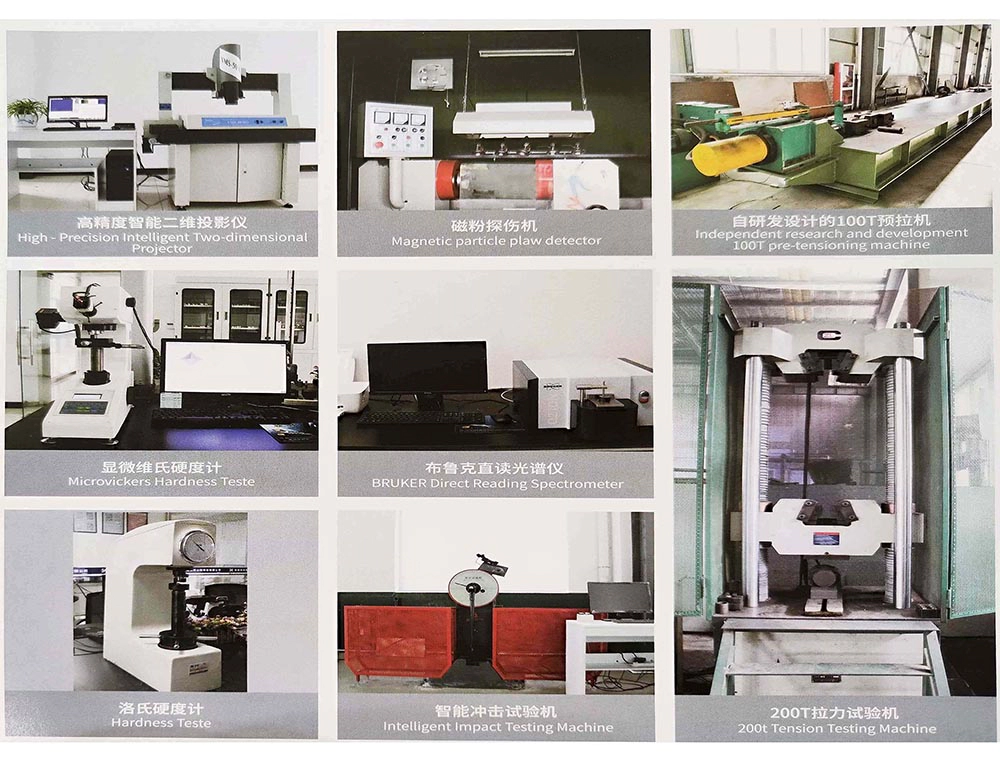
Preloading
The benefits of preloading roller chains are well documented. In general, preloading eliminates the initial elongation of the roller chain, increasing its service life. Preloading is an effective way to achieve this, and a preloading chart can help illustrate the benefits of this process. Chains with little or no preload will stretch significantly during drive start, while chains will stretch rapidly as the surface hardness of the wear parts increases. Additionally, a properly preloaded chain has little or no elongation during the initial start-up of the drive, extending wear life.
Premium manufacturers apply the preload concept during their production phase, aligning all major components at the same time. This approach helps eliminate elongation issues that lead to rapid degradation of the roller chain. If this is not checked, the chain drive will stretch immediately over time. To avoid these problems, it is important to purchase a high-quality preloaded roller chain from a reputable source.
The heat treatment process is an effective way to prevent excessive wear of the roller chain. Heat treatment is a complex process that takes place in a factory during manufacturing. This process helps the rollers maintain high hardness and depth, preventing breakage. When buying a roller chain, make sure that the chain is heat treated and that the chain is manufactured to a high degree of precision. It also ensures that the product can be used for a long time.
In addition to performance benefits, preloading can also reduce initial elongation. A preloaded roller chain will exhibit near linear elongation, whereas a non-preloaded chain will experience rapid elongation. Therefore, they will reach the recommended 3% elongation earlier. Make sure the chain is properly lubricated. Also, consider how the chain is arranged. This is critical for optimal longevity.


editor by CX 2023-05-16